Paycheck Budget Log Book
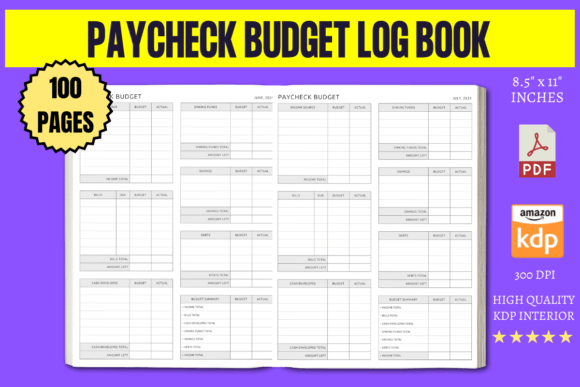
The Paycheck Budget Log Book is a practical tool designed for anyone looking to manage their finances with clarity and consistency. This 100-page log book offers a structured format for tracking income, expenses, savings goals, and financial progress. Its clean layout and organized design make it ideal for both personal and professional use. With a standard size of 8.5 inches by 11 inches, it fits easily into a bag or on a desk, making it accessible for daily use.
Visually, the Paycheck Budget Log Book features a modern, professional aesthetic that blends functionality with style. The interior is set up with bleed margins, ensuring that printed versions look sharp and polished. Each page is high-resolution, allowing for clear printing without loss of quality. While the cover design is not included, the interior is ready to be uploaded to platforms like Amazon KDP, making it a convenient option for self-publishers and small business owners.
Where the Paycheck Budget Log Book Shines
This log book works well in a variety of creative and practical contexts. For designers, it can serve as a reference for layout and typography, offering insights into how structure and spacing affect readability. Entrepreneurs and small business owners can use it to track cash flow, monitor expenses, and plan budgets efficiently. Marketers and content creators might find it useful for managing project budgets or tracking income from multiple sources.
In editorial design, the Paycheck Budget Log Book provides a template for organizing information in a way that’s easy to follow. Its layout is adaptable, making it suitable for both digital and print formats. For packaging design, the principles of organization and visual hierarchy seen in the log book can inspire more effective layouts. In web design and social media graphics, the same attention to detail and clarity can enhance user experience and engagement.
How the Design Influences Readability and Brand Perception
The Paycheck Budget Log Book’s design plays a key role in how users interact with it. The font choice, spacing, and alignment all contribute to its overall readability. A well-chosen typeface ensures that numbers, dates, and notes are easy to read, even when filled out over time. This is especially important for a budgeting tool, where clarity can mean the difference between accurate tracking and confusion.
From a brand perception standpoint, the log book’s clean and professional look reinforces a sense of reliability and organization. Users who regularly use the Paycheck Budget Log Book may associate it with discipline and financial responsibility. This can influence how they view their own financial habits and reinforce positive behaviors.
Consistency is another strength of the Paycheck Budget Log Book. The uniform layout across all pages helps users develop a routine, making it easier to stick with their budgeting goals. This consistency also supports brand recognition, especially if the log book is used as part of a larger product line or marketing strategy.
Choosing the Right Font for Your Project
While the Paycheck Budget Log Book itself doesn’t include specific fonts, the principles of font selection apply broadly. When choosing a font for your own projects, consider the purpose and audience. A serif font might be ideal for a traditional or formal design, while a sans-serif font could work better for a modern, clean look. A script or handwritten font might add personality but could compromise readability if overused.
For commercial projects, it’s important to evaluate font licensing. Some fonts are free for personal use only, while others require a license for business or resale. Always review the terms before using a font in a published or commercial context. Testing different font pairings can also help you find the right balance between aesthetics and functionality.
When working with the Paycheck Budget Log Book, consider how the layout complements your design choices. If you’re creating a custom version, ensure that the font you choose aligns with the overall tone of the log book. For example, a bold, modern font might suit a tech startup’s branding, while a more classic font could work well for a financial services company.
Practical Tips for Using the Paycheck Budget Log Book
Start by setting clear financial goals. Whether you're saving for a vacation, paying off debt, or building an emergency fund, having a target in mind can help keep you motivated. Use the Paycheck Budget Log Book to track your income and expenses each week, adjusting as needed to stay on track.
Consider using color coding or icons to differentiate between categories like groceries, utilities, and entertainment. This can make the log book more visually engaging and easier to navigate. You can also add notes or reflections at the end of each month to assess your progress and identify areas for improvement.
If you’re using the Paycheck Budget Log Book for a business or client project, make sure to customize it to fit your needs. Add your logo, brand colors, or specific metrics that are relevant to your industry. This will not only enhance the professionalism of the document but also make it more personalized and effective.