Editable Suicide Self-harm Journal
For individuals navigating the complexities of mental health, a structured and personalized approach can make all the difference. The Editable Suicide Self-harm Journal is designed to offer a safe, organized space for reflection, self-assessment, and emotional processing. Whether you're managing suicidal ideation or supporting someone who is, this resource provides practical tools to help you better understand and manage your thoughts and feelings.
Understanding the Purpose of the Journal
The Editable Suicide Self-harm Journal is more than just a notebook—it's a comprehensive guide tailored to those experiencing suicidal ideation or self-harm tendencies. It includes specific sections that encourage users to evaluate their risk levels, challenge negative thoughts, and reflect on their progress over time. This journal helps create a sense of control and clarity in moments when things feel overwhelming.
Each section is crafted with care, offering prompts and worksheets that promote self-awareness and emotional resilience. By engaging with these exercises regularly, users can gain insight into their patterns of thinking and develop healthier coping mechanisms.
Key Features and Benefits
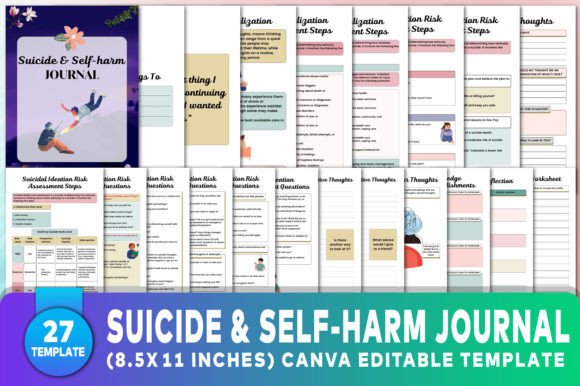
The Editable Suicide Self-harm Journal comes with a range of features that make it both versatile and effective. It includes 27 customizable Canva templates, allowing users to tailor the content to their unique needs. The high-quality PDF, JPG, and PNG files ensure that the journal looks professional whether printed or used digitally.
With a size of 8.5 x 11 inches, the journal is convenient for daily use. The 300 DPI resolution guarantees sharp and clear prints, making it ideal for both personal and professional settings. Users can easily edit the original files to suit their preferences, ensuring that the journal remains a dynamic tool for growth and healing.
How the Journal Supports Mental Health
One of the most valuable aspects of the Editable Suicide Self-harm Journal is its focus on risk assessment. The journal includes detailed steps for evaluating suicidal idealization and ideation, helping users identify warning signs and take proactive measures. These assessments are structured to be simple yet thorough, allowing for regular check-ins and ongoing support.
The journal also includes sections for challenging negative thoughts and expressing emotions. These exercises are particularly useful for individuals who struggle with self-criticism or difficulty articulating their feelings. By providing a structured format, the journal makes it easier to process complex emotions and develop a more compassionate relationship with oneself.
Practical Use Cases
Professionals in mental health fields, such as therapists and counselors, may find the journal useful as a supplementary tool for their clients. Its customizable nature allows for adaptation to different therapeutic approaches, making it a flexible resource in various settings. For example, a therapist might use the journal to guide a client through a weekly debrief, helping them track progress and identify areas for improvement.
Entrepreneurs and busy professionals can also benefit from the journal by using it as a tool for self-reflection and stress management. In high-pressure environments, taking time to acknowledge accomplishments and practice self-compassion can significantly impact overall well-being. The journal offers a structured way to pause, reflect, and reset, which can enhance productivity and reduce burnout.
Who Can Benefit Most
The Editable Suicide Self-harm Journal is particularly beneficial for individuals who are actively working on their mental health. It is ideal for those experiencing suicidal thoughts, self-harm tendencies, or emotional distress. The journal’s structured approach can provide a sense of stability and direction during difficult times.
Additionally, caregivers and family members of individuals struggling with mental health issues may find the journal helpful. It can serve as a resource for understanding the experiences of their loved ones and offering informed support. The journal’s emphasis on communication and reflection can foster deeper connections and improve mutual understanding.
Customization and Flexibility
One of the standout features of the Editable Suicide Self-harm Journal is its customization options. With 100% editable original files, users have the freedom to modify the content to suit their specific needs. This flexibility is especially valuable for individuals who require a personalized approach to their mental health journey.
Whether you prefer a minimalist design or a more detailed layout, the journal can be adapted to fit your style. The ability to edit the Canva templates ensures that the journal remains relevant and useful over time, even as your needs evolve.
Limitations and Considerations
While the Editable Suicide Self-harm Journal is a powerful tool, it is important to recognize that it is not a substitute for professional mental health care. It is designed to complement existing support systems and should be used alongside therapy or counseling when necessary.
Users should also consider their comfort level with self-assessment and reflection. Some individuals may find certain sections of the journal challenging or triggering. In such cases, it is advisable to seek guidance from a mental health professional before proceeding.
Conclusion
The Editable Suicide Self-harm Journal offers a thoughtful and structured approach to mental health support. With its customizable templates, practical exercises, and focus on self-reflection, it provides a valuable resource for individuals navigating difficult emotional terrain. Whether used for personal growth, professional development, or therapeutic support, the journal is designed to empower users and promote emotional resilience.